What’s happening when we become middle-aged

An exploration of what is occurring during the midlife passage, common questions people grapple with during midlife, the challenges and opportunities that midlife presents, how ambition factors into one’s experience of the midlife “reckoning,” negative aspects of ambition, the importance of atelic activities in midlife and identifying what gives you purpose or meaning in the second half of life. 

There’s a scene in Risky Business that captures how I felt about aging when I was first really feeling the impact of it, at age 47. Tom Cruise’s character is trying to stop his father’s Porsche from rolling into Lake Michigan. He frantically tries the locked driver’s side door. He runs in front of the car to try to hold it back. And eventually he throws himself onto the hood, yelling, “Please, God, no!” 

Around this time, I had a midlife crisis. Now 57, I’m well on the other side of it. But I have come to think life after 50 is distinctly different than life before 50. 

My rocky transition from relative youth to being, looking and feeling older made me curious to talk to others about their experience of the midlife passage. (This is the term coined by journalist and bestselling author Gail Sheehy, who released Passages; Predictable Crises of Adult Life in 1976, which was a hit, and later, New Passages; Mapping Your Life Across Time. Though the latter came out in 1996, it is still relevant and relatable. Sheehy is a fantastic writer, and the stories of different men’s and women’s experiences of the midlife passage are both fascinating and heartening. I clung to the book in my darkest moments.) 

Through my conversations with peers on my podcast, Gen X at Midlife, as well as from my extensive reading and reflection, I think I’ve developed a good understanding of what is occurring during the midlife passage. I know well the challenges to one’s happiness and the opportunities for growth and greater joy.   

A Dip in Happiness in Midlife

Credit: Reputation Today

A 2008 study by economists David Blanchflower at Dartmouth College and Andrew Oswald at the University of Warwick showed there is a U-shaped curve to human happiness. That is, happiness starts high in young adulthood and falls to a low point occurring on average at around 46 years old, then swings upward again, rising highest in one’s 60s and beyond. (Interestingly, in 2012, primatologists found great apes experience a similar U-shaped curve in happiness.) Since this finding, some scientists have challenged it. But I have yet to meet anyone who did not experience a dip in happiness in midlife. 

Though some people experience an existential crisis in their 20s or 30s, I believe actually being closer to the end makes the midlife passage a different, more weighted situation. The changes that occur to one’s physical appearance in the late 40s and early 50s are key to the bigger shift that is occurring. While many people remain relatively youthful looking up until midlife, there comes a turning point at which one’s jawline, chin or neck signals a crossing from youth to, if not “old age,” then “older” age. 

Whether or not a late-40-or-early-50-year-old is upset about losing their youthful appearance–-and to my surprise, some are not–-suddenly having a changed face signals the subconscious, if not the conscious mind, that something important has occurred: Time has run out. 

Not really, of course. At 50, you might still have 25 years or more left. But feeling like you’re out of time is significant. Because this is the starting point from which a lot of midlife pain stems.  

Simultaneously, hormonal changes are occurring for both men and women, affecting one’s drive, competitiveness, level of anxiety, and mood. Children leaving the nest and parents needing caretaking also create change in the middle-aged person’s daily life and outlook. 

When my face changed, at age 47, it felt as if a stopwatch had gone off and time to attain my dreams was up. Always very driven, I had spent 30 years working toward that next shining hilltop in the distance. And though I had achieved a lot, I did not yet have the success I’d long envisioned. Even if it weren’t too late to achieve the success I wanted, how would I possibly enjoy it if I was no longer young and attractive? (Each question I grappled with at this time revealed an assumption I didn’t know I held. My assumption in this case: I can’t be happy if I am not attractive.) This brought up so much anger and sadness, I cried many times over the course of several years as I tried to process and make peace with it. 

Reckoning with goals not attained is a hallmark of the midlife experience. My theory is that the more ambitious a person is, the more difficult the midlife reckoning is. Because this kind of person has high expectations for the future and a vivid picture of where they want to end up. Theirs is not a vague idea of success; they know exactly what they want and they’re crushed–and angry!–if/when they don’t get it. Ambition had helped me make three movies. It had fueled me for as long as I could remember. At 50, I was surprised to realize it was the underpinning of my life. 

A Socially Acceptable Affliction: Ambition

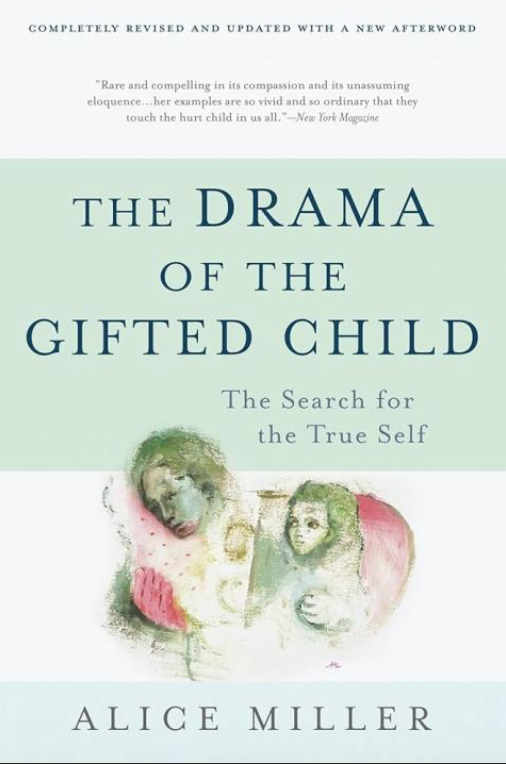
Two books awakened me to the role ambition has played in my life–Emotional Clearing by John Ruskan and The Drama of the Gifted Child by Alice Miller. In his book, Ruskan lists “the ways of self-rejection” and says this about ambition: 

“Ambition is one of the most common attributes of the isolated ego. The pain of isolation is felt, and it is assumed that release will come when personal success, wealth, possessions, or fame is acquired. … We become conditioned from childhood to reject ourselves and our present condition, whatever it may be, and to want more.”

That last line, about “rejecting ourselves,” was impactful when I first read it. Previously, I had not understood how ambition made me unhappy. But now it was becoming clearer. I did not love myself as I was, and I would not be satisfied until I had achieved more. 

In her book, Miller describes the child who develops outstanding traits in a bid to be loved and kept safe by a parent who does not acknowledge or meet their needs. The grown child continues to pursue excellence with unexpected results: 

“…the son enjoys success and recognition, but these things cannot afford him more than their present value; they cannot fill the old gap. Again, as long as he is able to deny this need with the help of illusion–that is, with the intoxication of success–the old wound cannot heal. Depression leads him close to wounds, but only mourning for what he has missed, missed at the crucial time (in childhood), can lead to real healing.”

“Continuous performance of outstanding achievements may sometimes enable a person to maintain the illusion of the constant attention and availability of his parents… Such a person is usually able to ward off threatening depression with increased displays of brilliance, thereby deceiving both himself and those around him. … Actually, however, that personality has no secure foundation and is dependent on the supporting pillars of success, achievement, ‘strength,’ and above all, the denial of the emotional world of his childhood.”

What I wanted to know is, why did I even have dreams if I would never get to attain them? If dreams just led to heartbreak and disappointment, was it better not to have dreams? If a person doesn’t have dreams, what is the point of their life? This, of course, leads to the biggest question of all.

Why Are We Here? 

There is, of course, no definitive, provable answer to this question. 

Going down an existential spiral, I eventually regretted almost every choice I’d ever made in my life. Including ones I’d never even debated before. I was rethinking all of my decisions because I wanted to somehow not end up here

It isn’t that here was so awful. It’s that it wasn’t what I had pictured. Which is the crux of the midlife crisis. You are waking up to what your life actually is. 

Whatever fantasy you had about how your life was going to turn out is now dying a hard death. Your suddenly older face is unavoidable evidence that the future has arrived. It’s here, now

Evidence of this awakening is reflected in another question many people ask now: “Is this all there is?” Many struggle with the demoralizing realization that the future likely just holds more of the same thing one is experiencing now. 

Credit: Sony Pictures Classics

In Nicole Holofcener’s movie Friends with Money, Frances McDormand’s character stops washing her hair because she’s tired of doing the same things over and over. And she no longer believes in the power of a new, expensive shampoo to transform her. 

To me, this is the most challenging aspect of the midlife passage: the dawning awareness that there is no object, achievement or circumstance that will make the future significantly better than the present moment, that will make you happier in any kind of lasting way. This is why both successful people and people who regard their life as a failure experience pain in midlife. Those who have attained success are not excited by the prospect of repeating now-familiar conquests, and those who have not known success must contend with painful feelings around not having done what they would have liked to.  

Around 50, there is a growing suspicion that “Life” is not about getting everything you want but instead a series of opportunities to grow on a spiritual level.
Similar to Phil Stutz’s comedian patient in his and Barry Michels’ invaluable book, The Tools, I thought the point of life was to get to Easy Street–a place at which I’d be happy, fulfilled and wealthy. (Another never-before-questioned assumption: The point of life is to become as successful as possible.)

After whipping myself to go harder in my career, I am frustrated with myself for not cooperating. Like many people my age, I am questioning whether I want to continue doing what I’ve been doing or try something new. 

After so many years in a career, you’ve experienced all the pitfalls. Again, you don’t harbor as many illusions about the future bringing something much better than what you’ve experienced so far. This is probably why many people stop doing whatever it is they’ve been doing for their first career and, around 50, pick a new career (often one in which they’ll be of service). Or, they retire as soon as they can in order to seek new experiences. I’ve noticed an uptick in high school classmates’ travel pic posts on Facebook. A few of my friends are going back to school for master’s degrees. Others have gotten into birdwatching, photography, drawing, tap dancing… When I asked my aunt, a talented artist, why she hasn’t picked up oil painting again, she said, “Why would I do that when I can play pickleball?”  

This is a key to aging happily. Choosing atelic activities (ones that don’t have an end point)–things you enjoy doing while you’re doing them, not because they might offer a payoff in the future. Learning new things, acquiring new skills, and exploring topics you’ve always been curious to know more about is, to me, one of the greatest joys of the second half of life. When I set goals now, I do it for the fun I anticipate having along the way. Not because I expect the arrival or achievement to make me happier or more worthy of love than I am today. 

For me, now, the ultimate accomplishment is to live in the present and enjoy what is. Often I sit on my back doorstep and listen to the birds singing outside. I like to close my eyes and face the sun, enjoying what the warmth feels like on my face. I admire the trees, their leaves rustling in a breeze. I’m grateful to be alive and am in awe of the natural world around us. 
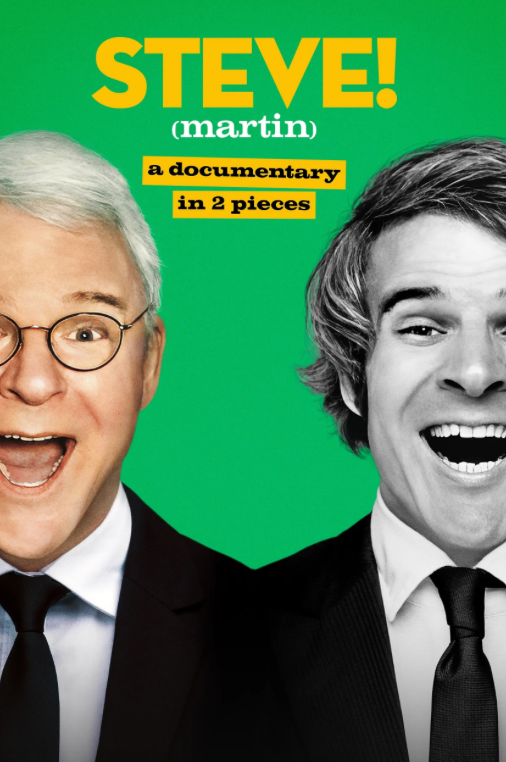
As a film lover, I can’t help but reference one more movie–Steve! (Martin): A Documentary in 2 Pieces. It helped me articulate my purpose, the thing that has the most meaning for me at this point in my life. In the film, Martin relays a dream he had, in which he asked how a person dies happy. He had a dream. In the dream he asked how a person dies happy. And the woman he was with in his dream said, “Have adventures.” And he said, “You mean travel? See waterfalls and stuff?” “No,” the woman said. “People.” 

And that’s what Steve Martin appears to be doing–having adventures with people. It’s what I prioritize now, too. Interestingly, making films is a way of having adventures with people. Until now, I had not focused on that, being instead fixated on the results of my work, the outcome. 

But as you’ve likely heard by now, studies show our relationships are the biggest indicator of our happiness. And in the happiest places on earth, people spend an average of 6 hours a day in face-to-face interaction. Most of us here in the U.S. spend nowhere near that many hours a day with people. But I think we would be much happier if we did. In his article, “The Anti-Social Century,” journalist Derek Thompson observes that people are craving more and more time alone, because their internal batteries are spent from being so online. The firehose-like stream of updates from others leaves us feeling exhausted and depleted. Though our response is to spend yet more time alone with our screens, the antidote is of course the opposite: to get offline and spend time with people. This is what I am prioritizing in the second half of life.
“…an insurgency of the soul and overthrow of the ego’s understanding of self and world, and a rather demanding invitation to live more consciously in the second half of life. But first came … the sense that each of them had moved, or better, been pulled, from a familiar environment into some darker wood.”

 – James Hollis, Finding Meaning in the Second Half of Life; How to Finally Really Grow Up
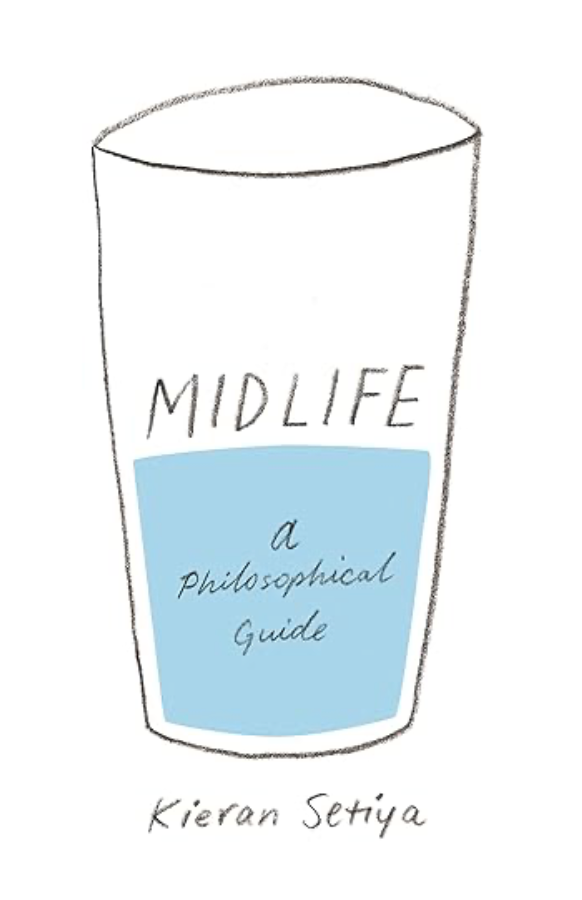
“‘Up till now,” he said, ‘life has seemed an endless upward slope with nothing but the distant horizon in view. Now suddenly I seem to have reached the crest of the hill, and there stretching ahead is the downward slope with the end of the road in sight—far enough away it’s true—but there is death observably present at the end.’

“What floored me were the existential questions of midlife. …. They are questions of loss and regret, success and failure, the lives you wanted and the life you have. They are questions of mortality, infinitude, of emptiness in the pursuit of projects, whatever they are. Ultimately, they are questions about the temporal structure of human life and the activities that occupy it.” 

– Kieran Setiya, Midlife; A Philosophical Guide
Learn more about solo filmmaking!

I recently had a fun discussion with longtime friend Susan Burnstine for Santa Fe Workshops. We talked about why I became a filmmaker, the circumstances that led to my making my first movie, and what I think of film festivals. We also covered how to decide what your first film should be about, what to do if you don’t have financing, and my favorite DIY film-distribution service. To watch, click on the video below, or click here.

We Did a 5-Day Juice Fast!

Fat, Sick and Nearly Dead is a documentary film made by an Australian businessman, Joe Cross, who had become so unhealthy and overweight he decided to take drastic action: he went on a 60-day juice fast, while crossing America and talking to strangers about his journey. His idea to have a film crew follow him was genius. Built-in accountability!

In the film, Joe talks to people in big cities and small towns, offering everyone samples of his juices (which he makes using a Breville centrifugal juicer in the back of his car!). He tells them about his mission to get in better health by juicing and asks them about their diet and attitudes toward food and health. He invites everyone to join him on the juice fast. But no one takes him up on it. He returns to Australia, slimmer and healthier.

Six months later he gets a call. A serious, likable guy he met in Iowa–Phil–asks him for help.

I won’t tell you anymore about the film, because it’s great and I think you should see it. Jimmy and I watched it with his dad and stepmom, when they visited us this summer, and we were so inspired we got juice-fast fever!

If you’re wondering why juice vegetables and fruit rather than just eat them: When you juice, you are getting the micronutrients of, say, 6 carrots, rather than just one—i.e., you’d have to eat a ton of produce to get the amount of micronutrients that are in one glass of green juice. And blasting your cells with a ton of micronutrients from plants—Joe Cross calls this “pure sunshine”–is great for your health. If you’re wondering why a juice fast: It gives your body a break from digesting meals, so it has more time to do important cleaning and repair work. It also acts as a “reset” button: it disrupts your current habits, cleanses your palate and makes you crave healthier foods again.

Eager to take advantage of the inspiration we were feeling, I researched juicers, chose the Kuvings B6000 and ordered a great little book, The Reboot with Joe Juice Diet. After some debate, Jimmy and I decided to do a 5-day fast. We started on Saturday (October 5) and finished it October 9 at midnight.

I went into the fast thinking it wouldn’t be that hard. Then I thought I wouldn’t get out of it alive. And finally, I learned to love aspects of it.

It was the hardest thing I’ve done this year. I feel like I’ve been through a crucible.

And now I have tremendous respect for what I think of as a magic bullet.

THE JUICE FAST

When you see photos hyping a juice fast, there are all these attractive glass vessels full of beautiful-colored juices. Mostly shades of pink, red and orange.

But those are FRUIT JUICES. Which have a lot of sugar, and even though the sugar is naturally occurring, you shouldn’t drink too much of these juices.

What you are not shown is an army of bottles full of army-green juice. Because that would not be as enticing. Which leads us to a crucial fact I’d forgotten before embarking on our 5-day juice fast:

I don’t like green juices.

I can handle the taste when I’m drinking them. It’s not bad, in the moment. But before I drink one, and after, I am repelled by them. I have no desire to drink them, whatsoever. Which I somehow didn’t think about before this juice fast.

So, on Day 1 of the fast, I found myself surprised, yet again, to realize I’d been living in Duality instead of Reality. If you are not familiar with the concept of “duality,” it’s basically la la land–your own made-up world, in which you do not face facts.

wanted all the benefits one gets from doing a juice fast. So, I forgot I don’t like green juices.

The higher the variety of quality produce (purple cabbage! fennel! parsley! carrots! yams! blueberries! raspberries! beets!), the murkier a green juice becomes. It is fantastic for your health. But it’s not necessarily something you’re psyched to drink 4-6 times a day. You should know, however, that Jimmy did not mind drinking the green juices. So, maybe you would not find them objectionable either. (We’ve found that the addition of fresh mint leaves and carrots can make a green juice taste relatively good.)

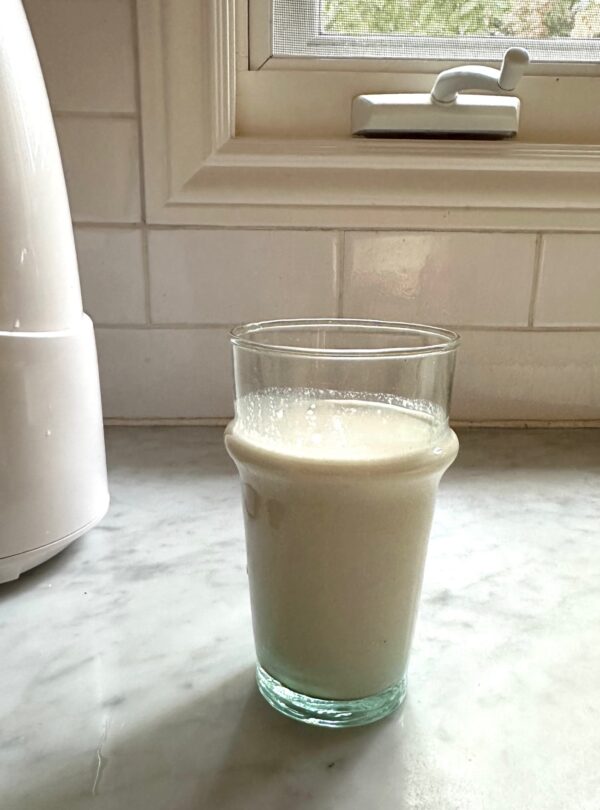
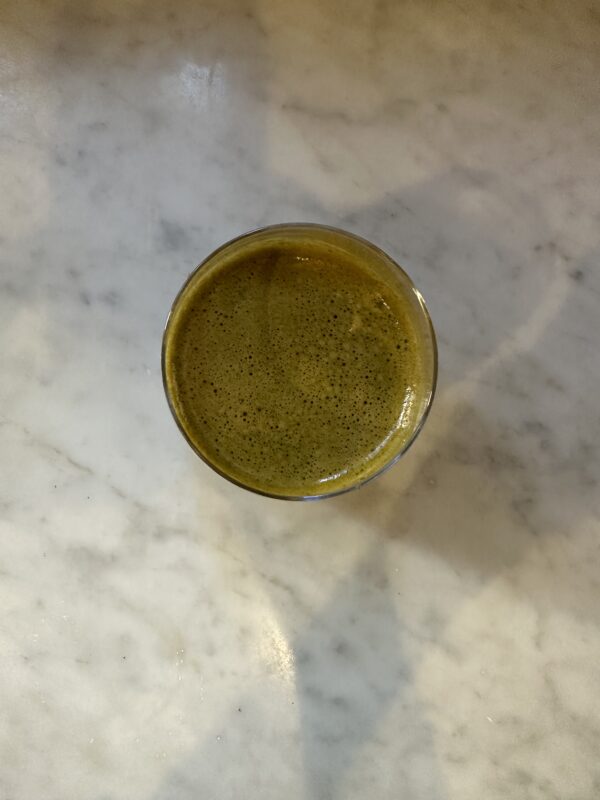
What saved me during our juice fast is the fact that I cheated. I allowed myself to have two things that were not initially going to be part of our juice fast: homemade nut milk and coconut smoothies. Yes, it remained a liquids-only fast, but officially, it was not a juice fast. It was a juice + nut milk + coconut smoothie fast. The reason for the coconut smoothies: Joe Cross recommends several glasses of coconut water each day that you’re fasting, to get electrolytes. But packaged coconut water tastes awful. If you hack open a fresh coconut available in the produce section of the grocery store, the water is DELICIOUS. But, it’s very sweet. I thought it would be better to cut the sugar impact by blending the water and the coconut meat into a smoothie (with nothing else added).

Homemade almond milk

Homemade coconut smoothie (just coconut water and coconut meat)

In 5 days, I lost 3 pounds. On Day 2 of the fast, my stomach was already so flat it was concave. Jimmy lost 5.8 pounds in 5 days.

During the fast, it often occurred to me that someone who eats as healthy as I do has less incentive to do a juice fast. Jimmy pointed out that I regularly eat all of the fruits and veg we were juicing. I eat super healthy every day–not in jags, not off and on. EVERY DAY.

Day 1 of the fast was hell.

I felt like I was crawling out of my skin. Looking back, I wonder now if it was a primal response–it’s as if I were a feral animal who was desperate for food.

I wanted to cheat so badly, it shocked me. I wanted to shove food in my mouth when Jimmy wasn’t looking. I wanted to EAT EAT EAT and LIE LIE LIE to my friends and family on IG and FB, where I was posting about my fast. I was folding like a lawn chair. Unraveling like a cheap shirt.

That first day was so unbearable, I couldn’t imagine how I was going to get through it, much less 5 days. It felt impossible.

I sincerely wanted to quit and Jimmy gave me a great line on which to do it: “Woohoo! We made it through our 1-day juice fast!” Friends and family on IG and FB would’ve laughed, I’m sure, and I would’ve been off the hook. My integrity might’ve taken a hit, though, and that was something I couldn’t swallow.

But I continued to debate quitting the fast every minute of that first day AND for a good chunk of the second day. I had to admit that Day 2 was 50% less difficult than Day 1. Even though, at the end of Day 2, I finally had the cruddy feelings they warn you about. I felt run down, nauseated, weak, and shaky. That’s when I panicked and made myself a glass of cashew milk with extra sea salt. I didn’t even care that I was cheating/adding something unplanned to the juice fast, because I was scared by how bad I felt.

The next morning, Day 3, I woke up feeling like a million bucks.

Knowing I could have a nut milk or a coconut smoothie took the edge off. Big time. It helped me deal with the fact that I would be drinking more dark green juices for breakfast, lunch and dinner. What fascinated me about Day 3 is that solid food had suddenly become a distant memory. It’s crazy how quickly you can acclimate to a new normal. In just THREE days, I was accustomed to drinking juices instead of eating meals! That blew my mind.

Here’s another surprise discovery: You’re not really hungry on a juice fast! I don’t know if it’s because the juices are so nourishing, or what. There was one point at which I was “starving.” But I should’ve just drank another green juice. The fact is, I probably just didn’t want to. Because I had already become repelled by them on Day 1. But if you do drink 4-6 veg and fruit juices daily, like you’re advised to by Joe Cross, you truly are not hungry. You might definitely still want to EAT FOOD. But you’re not actually hungry.

I only felt cruddy a couple of times during the juice fast—the night of Day 2, and maybe the night of Day 3. Jimmy never felt cruddy at all! He had a slight headache at one point but he said it wasn’t bad. We had abruptly stopped drinking two matcha lattes a day, when we started the fast, so our headaches probably were just from stopping having caffeine.

Jimmy was much more sanguine during the juice fast. He didn’t find it as difficult as I did. He was not tempted to quit like I was.

THE STRANGE EFFECT OF DAYS 1 AND 2

On Days 1 and 2 and even parts of Days 3 and 4, I was unable to be in the present moment much. I was too miserable! I felt restless and so uncomfortable. I just kept wanting so badly to quit the fast.

But by Day 5, the juice fast had become easier. Possibly because I knew it would be over by midnight. (At the same time, I kept fighting an overwhelming impulse to just blow off the final hours of juice-fasting and EAT!)

We did debate staying on the juice fast for longer, though. Because each day you stay on it, you’re giving your body a chance to do important cleaning and repair work, and you are feeling fantastic. Full of vitality. Also, juicing instead of eating makes life easy in many ways: you don’t have to decide what to eat or plan meals, you don’t have to cook or clean up after cooking.

Most people keep accruing more and more miraculous health benefits the longer they juice fast. (If you want to stay on a juice fast for longer than 15 days, like Joe did, it’s recommended you consult a doctor first and during.) It’s especially easy to see how people who have serious health issues keep going. Because many stop experiencing symptoms in the very first week of juicing and even cure themselves of their physical ailments if they keep up a new, healthier diet. And for those who are overweight, it must be exciting to drop a pound or two a day. It’s hard to beat that rate of speed.

Joe Cross drank nothing but veg and fruit juices for 60 days. He lost 87 pounds, stopped having painful hives and blisters from the autoimmune condition he’d developed years prior, and was able to keep ramping down from the 20mg of prednisone he took daily. He eventually stopped taking the steroid altogether and is healthy and happy from having maintained a healthy diet and lifestyle since making Fat, Sick and Nearly Dead.

I found myself really admiring him and Phil and the woman who’d suffered migraines from the film. They really became heroes to me, during our juice fast. I so admired their staying on the juice fast for as long as they each did.

On Day 5, like I said, Jimmy and I were conflicted about whether to stop or keep going. Ultimately we decided to stop juice-fasting just because we don’t have a lot of weight to lose and we didn’t want to get our bodies used to not digesting solid food, having a reduced calorie intake, etc. But we really were torn.

HERE’S THE WEIRD TAKEAWAY

The final surprise we’ve experienced: Eating food again is not as incredible as we thought it’d be. I mean, it’s great, yes. But my epiphany is this: A juice fast is not as awful as you think, and returning to eating solid food is not as great as you think.

A juice fast “reboot” is a brilliant solution for getting into better health immediately. It makes you appreciate the incredible properties of plants.

And it’s cool that you can heal your body of misery-causing or even life-threatening ailments with something provided by nature.

FIVE TIPS FOR DOING A JUICE FAST:

  1. Don’t burn too many hours researching juicers. Joe Cross acknowledges that none are a breeze to clean. Our Kuvings B6000 masticating juicer is definitely easier to clean than the first juicer we had years ago, a Breville, and I love it. It’s a goodlooking, vertically oriented appliance and does not take up a lot of counter space. But Joe loves Breville and remains a fan of their fast centrifugal (also vertically oriented) juicers, which are relatively affordable. They don’t heat the juice, destroying the nutrients, which is key! That means you can store juice in the fridge for 48 hours as opposed to needing to drink it within minutes of making it. We got our Kuvings at PlantBasedPros.com for a small discount and paid no sales tax–it was around $375 total. I think you can get a Breville centrifugal juicer for around $200-something. I would also strongly recommend buying The Reboot with Joe Juice Diet recipe book, by Joe Cross. It tells you what to expect, it lays out daily “meal” plans for a 3-day juice fast, a 5-day juice fast, etc., and it has great recipes for healthy meals when you transition off your juice fast.
  2. Start your juice fast on a date that allows you to lay low for the first 2-3 days, because you might feel some amount of physical discomfort such as a slight headache or lack of energy. Alternate strategy: Start it at a time where you’ll be really busy and will welcome the break from planning and preparing meals! You might want to batch-process juices, such that you are only using and cleaning your juicer once every 2 days.
  3. You might want to buy a big bag of carrots, a few bunches of greens (kale, Romaine, parsley, etc.), a couple of pears (which are delicious when juiced!), 1-2 bunches of celery, 2 yams, and at least 2 pints of berries to get started on your first day of juicing. And then you will likely need to keep going back to the store every other day to restock your produce supply. Btw, some people complain that it’s expensive to buy organic produce for juicing, but we spent way less than we do on regular grocery runs that include packaged foods.
  4. It’s probably not good to have even natural fruit sugar sitting on your teeth for hours between “meals.” Consider getting in the habit of brushing your teeth after every juice, especially if your juices include fruit such as apples, pears or oranges. Speaking of, I would not add a lot of fruit to your “main meal” (green) juices. We found that green juices actually taste better with carrots as a sweetener rather than, say, apples. We made separate, delicious fruit-combination juices to drink in small quantities as a fun chaser for green juices. (Pear-peach-sweet potato juice is particularly good. I added a dash of cinnamon to mine.)
  5. Consider how you want to get electrolytes–through packaged coconut water? Or by cracking open fresh coconuts like I did? (It’s a bit of a chore, and it can splinter the bottom edge of your big chef knife, but coconut smoothies are delicious and are a reason to live when you are struggling in the first few days of a juice fast.) Or, Google other ways to get electrolytes naturally, without consuming beverages that have chemicals or added sugar.

Do something.

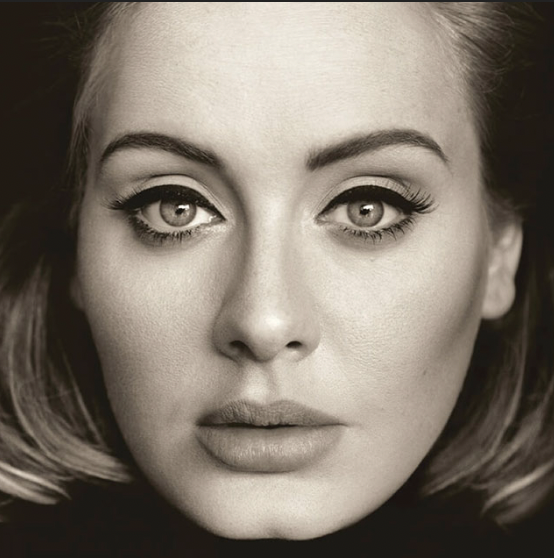
Every time I hear “Hello” by Adele, I’m amused by the line, “It’s no secret that the both of us are running out of time.” (Here, at the 3:40 mark.)

How could she and her ex be running out of time? The album was called “25” because that’s how old she was when she wrote those songs. Obviously, at 25, you’ve got lots of time! 

But it’s an incredible song, and that line adds urgency and gravitas to it.

The other day I was sitting here on my couch thinking about how digital courses enable you to share knowledge with lots of people, efficiently. Then I thought about what a pain in the ass it would be to make a digital course. And that’s when it hit me: 

Probably you never get extraordinary results without an extraordinary amount of effort. 

Put another way, an ordinary amount of effort will likely only get you ordinary results. 

(But if you know someone who has attained extraordinary results with an ordinary amount of effort, hit “Reply”! Lol.)

Of course, “extraordinary effort” doesn’t necessarily mean a hellish sprint. An extraordinary effort can be a long, slow process of working day in and day out. THAT’S what’s extraordinary: Staying with it. Persevering. Making tiny progress on a project bit by bit. And then, usually, having binge work sessions toward the end, as you’re finishing it.

But getting back to the topic of age: For me, the overwhelming experience of middle age is endlessly debating whether it’s worth it to make an extraordinary effort.

Should I knock myself out? Why? What is my motivation exactly? Will I get the results I want? If the odds of success are 50/50, or worse, should I knock myself out anyway? 

I know, you’re not supposed to care about the results. “It’s not what you get that makes you happy, it’s who you become.” 

Who do you want to become? 

Decide what identity you want, says Atomic Habits author James Clear. Focusing on the identity you want inspires you to commit to the habits that’ll get you there.

It’s not good to start asking yourself whether this or that is worth making the effort for. You end up walking in circles. 

Better to take action, toward something. Anything, honestly. 

Don’t wait for inspiration to strike. 

Don’t think about whether you’re in the mood. 

Just do it. 

Because—and yes, I’m going to say it—

It’s no secret that the both of us are running out of time. 

How to get through “the Dip”

I think the secret to enjoying the second half of life is learning new things.

Seth Godin says before you commit to learning something new, you have to decide whether you’re willing to get through “the Dip.” The Dip is the most difficult part of the journey, in which you’ll be tempted to give up. 

So how do you get through the Dip? It’s like Jeff Bridges’ response to people who want to know how to stay married for as long as he and his wife have: “Don’t get divorced.” The way to make it through the Dip is to not give up. 

Sounds easy. But it’s not. Just like staying married sounds easy, but sometimes it’s not.

During the past year, while taking painting classes with a group of people online, I privately announced to myself, at least 1000 times, that I was going to quit. 

I was on an emotional rollercoaster and I wanted off. 

When you’re learning a new skill and you’re in the Dip, you tell yourself, “Maybe I don’t really care about this after all. I thought I did. I mean, sometimes I do. But no—I don’t.”

This is b.s., of course. You do care. It’s just hard and you want to bail.

So, I was revising my stance on painting every other day.

“Making movies is my top priority. Art is a distant second.”

“Yeah, I’ve always painted, but so what? I don’t have to attain mastery. I’ll just keep winging it.”

“The problem is, I don’t really CARE about knowing how to paint. I don’t even know why I’m here or how I got here. It’s possible I bought a thousand dollars’ worth of art supplies just to avoid writing.” 

In fact, filmmaking is my top priority. But I still want to know how to paint. Even if I didn’t want to admit that on the bad days.

The bad days usually occur during the ugly “middles.”

The start of a painting is exciting. When you tone the canvas and map the composition, you’re full of hope and optimism. But as you move forward, you are bound to enter an ugly middle stage in which your painting is not looking so hot and you don’t know what you’re doing and you have no idea how you’re going to get out alive. 

It’s tempting to give up when you’re in the ugly middle stage of a painting.

But if you have grit, you keep going. And if you keep going, you develop even more grit. Sometimes you turn a corner quickly, and the painting starts to look good. But often not. For me, it’s usually touch and go until the very end. There’ve been times where I’ve wanted to throw in the towel even when I’m just a session away from finishing a painting!

To help you get through the Dip, you should take a class. Here’s why: 

1) Knowing that you have class on Tuesday, say, builds accountability into your practice and gives you a pressing reason to try “one more time” to finish that hideous painting you’re stuck on. You have to present SOMETHING, and it may as well be that painting, otherwise you gotta start a new painting. And you can’t do that, because you’ve already started 25 paintings that you’ve abandoned. Stacks of shitty paintings you didn’t get very far into are all over your house. Even you have to admit it’s time to finish something. 

2) Learning with a group fosters camaraderie. You’re in the trenches (the Dip) together! It’s fun to commiserate and share triumphs together, and it’s great to have people who’ll talk you off the ledge when you want to jump. When you’re down, someone else is up, and they will josh you out of your foul mood. You’ll do the same for them when they are losing faith. Plus, it takes time to become good. It’s a long haul. A slog. So, you’re going to want some company on the journey. And it’s nearly impossible to stay focused and determined over months and months without some kind of support, structure and accountability. 

3) For the same reason Alcoholics Anonymous is effective, seeing others who’ve done this difficult thing makes you think that maybe you can do this difficult thing, too. When you see your classmates steadily improve, it tells you, or your subconscious, that you will improve over time, too. 

4) Having an instructor give you assignments, lessons, and constructive criticism is key. Even if you tend to be a lone wolf and are self-directed and self-motivated, you might not be challenging yourself to do deliberate practice. Working alone, I had plateaued. For years! I didn’t realize what I needed was a TEACHER. Duh! And obviously, the better the teacher, the better your progress. (I started with “Oil Painting – Flow and Fluency,” from Kimberly Brooks, who is one of the best communicators I’ve ever encountered. Can’t recommend her enough.)

Here’s a description of a typical struggle in the Dip:

During one painting session, in which I was trying to paint a macaron, I kept saying, “I can’t do it! I quit!” And I’d jump up to go look for something to eat in the fridge. I was miserable. But I was so antsy, I couldn’t even eat. So, I would rush back to my chair, before I could change my mind, saying, “I’m going to try one more time!” I did this a few times, til finally, I stepped back from my work and was surprised to see my macaron (pictured at the top of this post) looked almost real. It felt like a miracle. 

A bigger miracle: Recently, I made it through the Dip. I know the exact moment it occurred. 

I had just finished a portrait of Debbie Harry. It’s not perfect. But it’s not about that. And it’s not about my being proficient now. I’m not. It has nothing to do with whether I think I’m “good” or whether you think I’m good. What changed is that I no longer think it’s impossible to become good. I finally banked enough experiences of struggling terribly then making it to the other side such that I now trust that if I just keep at it, I WILL make it to the other side.

It feels so good to be out of the Dip. It seriously almost did me in. I could’ve quit at any moment. 

How do we find it in ourselves to keep on going, to make it through the Dip? Maybe it only happens when we really, really want what is on the other side. 

Blondie. Oil on canvas. 20 x 16 in.

To feel happier and more optimistic


Since the pandemic, a lot of people have been feeling anxious, depressed, or are just not thriving. I recently came out of a rough time myself. When I tried to identify the biggest reason I feel so much happier and more optimistic now, the main thing I can point to is this practice called journalspeaking. It’s an efficient way to process emotional pain.

The term was coined by therapist Nicole Sachs, pictured above. Nicole hosts a popular podcast, The Cure for Chronic Pain. Every episode of the podcast is gold, no matter you have the specific symptoms discussed in it or not.

The cause of chronic pain is the same for everyone: the sympathetic nervous system has been triggered into fight-or-flight-or-freeze mode often enough, by stress or fear, that the brain gets confused and begins sending pain signals to the body even when there’s no danger present.

Both the podcast and Nicole’s short book, The Meaning of Truth, give example stories of people who’ve healed a wide variety of terrible-sounding and sometimes life-threatening physical symptoms using her practice of journalspeaking. 

Journalspeaking is when you write about your darkest feelings–like, the worst, most unspeakable things that come up from your subconscious, most importantly, anger.

Weirdly, I had no idea I had repressed anger. One reason we repress dark feelings and are unaware we have them is because we deem them socially unacceptable. Especially if we think of ourselves as a “good person.” 

This part is key: After you get out your anger, grief, insecurity, jealousy, etc., you should delete the document or tear it up and put it in the trash. Knowing you’re going to hit “delete” frees you up to say what you really feel. 

For me, typing is better than writing longhand. There’s something automatic that occurs, in which my subconscious mind seems to take over, when I’m typing on a keyboard. 

Nicole says that whether or not you believe you have an inner child, she is certain we all do. And she says, “Until you give your inner child a voice, they’re running the show.”

Journalspeaking allows your inner child (or bitchy teen!) to rant and get out the worst. I don’t want to scare you off of it, but I’m just going to be honest here. If you’re really dredging up your anger, grief, loss, etc., you will likely cry. Be glad. Crying just gets the toxic stuff out of you faster. Give yourself extra credit points for every time you cry!

After each journalspeaking session, you’ll be stunned at how much more lighterhearted you feel. I can bawl my eyes out while typing breathtakingly painful fears, thoughts and memories, then 10 minutes later, I feel like a new person. It’s surreal, and incredible. 

Another surprising thing is that you’ll have a lot more love, compassion and patience for the very people you rail against in your journalspeaking after you vent about them.

Nicole points out that once you speak your ‘truth,’ your truth will change. For example, when journalspeaking, it’s okay to say you “hate” your kids/mother/father/sibling/best friend. Those feelings will likely morph once you’ve let them come up.

Also, what I have found is that eventually, you will work your way down to anger at yourself. (Which is kind of a surprise. I thought it was just all these a-holes I’ve had to deal with that were making me so unhappy! Turns out, it’s my own codependence and other self-rejecting actions that have, in part, made me so miserable.) (I know–this is probably starting to sound like a lot of self-help jargon! But I hope those of you who are in pain will get it.)

So, Nicole recommends doing a 10-minute self-love and self-compassion meditation after each journalspeaking session. (Yeah, yeah. I ignore this advice, too. But maybe that’s the very thing we both need! More self-compassion and forgiveness!)

If you journalspeak for 20 minutes 2x a day for 30 days, I promise you will see a major reduction in your physical symptoms and YOU WILL FEEL A TON HAPPIER. It changed my life and I can’t recommend it enough.


Nicole’s book, The Meaning of Truth, on Amazon

Nicole’s website (she often hosts in-person retreats, which sound cool)​

I started reading Just Kids yesterday afternoon, when Jimmy went to get his hair cut. 

I kept reading through the Astros’ World Series game against the Atlanta Braves and what I thought would be a constant interruption—Halloween trick-or-treaters. But the doorbell only rang once the entire night, enabling me to stay immersed in the story of Patti Smith and Robert Mapplethorpe’s romance. My eyes were hurting and my vision was fuzzy when I finished it this morning. 

I get why it won the National Book Award. I was and am still unfamiliar with most of Patti Smith’s body of work. Now I know she is, first and foremost, a poet. There is so much great writing in the book, my usual habit of highlighting good lines would’ve rendered whole pages yellow.

I knew almost nothing about Robert Mapplethorpe either, except that I had once looked at his work and found some of his photographs too disturbing to face. In the book, Patti mentions feeling the same way about some of his work. “I admired him for it, but I could not comprehend the brutality. It was hard for me to match it with the boy I had met.” 

The boy she had met, in Tompkins Square Park in New York City when they were both around 20 years old, was kind and caring. He had been raised in a cold, non-communicative Catholic family. His dad wanted him to either enter the military or become a graphic designer. Robert knew he was an artist and rejected those paths. 

Patti has a reverential attitude toward artists. During childhood, her family made exactly one visit to an art museum together (there were 4 kids and her parents didn’t have a lot of money). Afterward, she felt changed. She wanted to be an artist, but she had a private concern. She mentioned a movie, The Song of Bernadette. She was “struck that the young saint did not ask to be called. It was the mother superior who desired sanctity, even as Bernadette, a humble peasant girl, became the chosen one. This worried me. I wondered if I had really been called as an artist. I didn’t mind the misery of a vocation but I dreaded not being called.” 

In their sweet, youthful relationship, Patti and Robert took care of each other. Even after they realized they were heading in different directions, they vowed to continue supporting each other until they both could stand on their own. They would draw, side by side, in their apartment, for hours at a time and into the night. Together, they shopped for dimestore trinkets and found “trash” that was elevated to treasure in Robert’s early collages. 

An especially enjoyable aspect of the book is the building suspense regarding how and when he would finally begin taking photographs and she would begin writing songs and performing with a band.

Interestingly, while he was making extremely provocative and polarizing work, Robert was urging Patti not to make work that was too confrontational or controversial. He wanted her to make hits–“music he could dance to”–and be successful. 

After they both had achieved some success, they had a joint gallery show of their work. For the show, they made a short film, in which Patti shared an idea that she and Robert had often discussed: 

“The artist seeks contact with his intuitive sense of the gods, but in order to create his work, he cannot stay in this seductive and incorporeal realm. He must return to the material world in order to do his work. It’s the artist’s responsibility to balance mystical communication and the labor of creation.” 

I was glad she mentioned this, because I’ve always wondered if it’s “natural” that one has to actually make the art. Shouldn’t it just appear, effortlessly? But that would require magic, right? So, I’ve always arrived at the same conclusion: apparently you do have to actually do the messy, real-world work of making the art. But reading the above quote was reassuring. 

When I finished the book and closed it, I resented having to re-enter normal life. I wanted to stay in the world she created. 

There are more passages I want to share, but I’ll choose just one. I hope it’s okay that I’m sharing it. It’s her description of having seen a swan when she was very young:

“The narrows of the river emptied into a wide lagoon and I saw upon its surface a singular miracle. A long curving neck rose from a dress of white plumage.

Swan, my mother said, sensing my excitement. It pattered the bright water, flapping its great wings, and lifted into the sky. 

The word alone hardly attested to its magnificence nor conveyed the emotion it produced. The sight of it generated an urge I had no words for, a desire to speak of the swan, to say something of its whiteness, the explosive nature of its movement, and the slow beating of its wings. 

The swan became one with the sky. I struggled to find the words to describe my own sense of it. Swan, I repeated, not entirely satisfied, and I felt a twinge, a curious yearning, imperceptible to passersby, my mother, the trees, or the clouds.” 

Just Kids is, for me, like that swan was for her. It’s magnificent, and it evokes a curious yearning—the desire to be able to express myself the way she learned to do.

“Val”

Photo credit: Paramount/Kobal/REX/Shutterstock

We liked Val Kilmer’s film about his life, Val. Have you seen it?

After watching it, I wondered, Why was that film so compelling?

To start, people who’ve experienced tremendous success are almost always of interest, right? Anyone who has scaled the mountain of their profession, not to mention managing to stay on top for a long time, is different than most people. We can’t help but be curious about how they did something that most people haven’t figured out how to do.

Movie stars are usually of interest, too, of course. You can’t help but wonder what it’s like to be them. And almost everyone wants at least one of the things they have: money, status, power or influence, or a great social life and unique experiences. But we also want to see if we don’t want what they have. Maybe we’re hoping it’s not all it’s cracked up to be, so that we don’t have to experience the discomfort of envying them. 

In fact, there are aspects of Kilmer’s current situation that are not enviable. If he were now a gently worn but easily recognizable version of the handsome, successful person he was when he was young and if he had had a relatively easy last couple of decades, a film about his life would possibly just be a victory lap. But because he has experienced significant setbacks, some of which have possibly been caused in part by his own actions and choices, he is a touching figure.

To me, the most impactful thing about the film is that he’s in a more difficult situation than most but he’s happier than many. 

He has said, “I feel wonderful, despite how I sound.” (You’ll find out what he’s referring to when you see the film.) Throughout it, his joie de vivre, gratitude for his family, and appreciation of the unique experiences he’s had are evident.

Another thing that makes the film compelling is that, because he has so much footage, from early childhood to later adulthood, you see his life play out before your eyes. It’s so rare to see the full sweep of someone’s existence on this planet, it’s awe-inspiring. It’s hard not to use the word “epic”—to describe anyone’s life, no matter the person has had a big life or not. The passage of time alone is epic. 

And the fact that we’re heading toward the same destiny unites us all. Whether you’ve played Batman or dated Cher or not, you’re going to die. Eventually, we all will be old, we all will have endured unimaginable losses, we all will exhibit physical wear and tear, and we all will face our mortality. As you look at footage of Val when he was young, all the way up to how and where he is today, you can’t help but think of your own youth, your own middle age, and your own imminent old age. You can’t help but think about your own life choices and what has gone well and what hasn’t. You can’t help but think of your own attitude and outlook when you witness his. 

Some things that elevate the film:

The drama of really good luck and really bad luck. 
The way he has turned his photos, experiences and memories into art, in the form of scrapbooks and more. 
The imaginative editing of the section about his mom, after her passing. 
His colorful and creative self-expression, through art, his choice of work projects, and what he wears. 
The contribution of his son, who is a talented narrator and whose voice adds warmth. 
His revelation about attending autograph signing events.
His ability to forgive and accept others. 
His exuberant love of his children. 
His experience of grace. 
The ‘closing statements’ he makes in the final moments of the film.​

After seeing Val, I felt like I had been transported on a journey of an alternative life I might’ve had. I felt like I understood more about the human condition for having walked in his shoes.

And I felt the full force of the miracle of life, that we each experience: great tragedy, incredible luck, overwhelming experiences of love, and the surreal drama of being on this plane of existence for a finite period of time.

The film offers everything I could want in a work of art.

If you’ve seen it, I’m curious to hear what part in particular stood out to you. Please let me know in the Comments.

xo,
Courtney


p.s. You can stream Val on Amazon Prime.

My new motto!

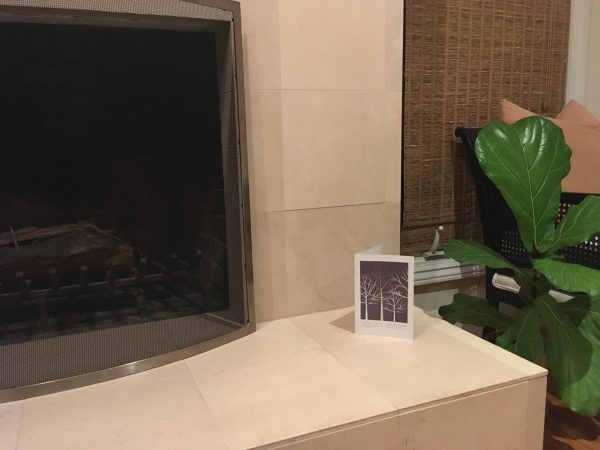
I think this holiday season really snuck up on people, because so far we’ve only received one card. From Dr. Bernard Markowitz. (A cosmetic surgeon who told me, in a consult, that my face is asymmetrical. Happy Hanukkah to you, too, Dr. Markowitz!)

Recently, I was sitting on my couch, fixated on the sensation of acid creeping up into my throat, because apparently I have GERD, and I thought about how stress was likely the cause. And it occurred to me, for the millionth time, that there’s really no good reason to feel stress. Because if times are good, you should be happy, and if times aren’t good, you’re undoubtedly growing. Suffering always leads to greater wisdom and compassion. “Pain is the gift no one wants”! In fact, some of the most memorably beautiful moments of my life have occurred when I was going through some kind of hell.

Anyway, while having these thoughts, I stumbled upon a new life philosophy. A new motto! And this motto is so good, it makes me wish I were a player in the jam-packed Online Motivational Coaching Space. Because any life coach worth their salt has a sticky tagline. But enough preamble, I’m gonna lay it on you:

Look forward to EVERYTHING. Even the “bad.”

Right?! I mean, how much better would life be if we didn’t worry about the future, didn’t dread anything, and instead eagerly anticipated EVERYTHING, even the bad, knowing that the bad, especially, will lead to awesome insights, connection to others, and our personal development?!

Excited, I wrote this new motto on an index card, and I look at it occasionally. Has it stopped me from experiencing stress? Fuck no. But maybe it’s because I don’t look at it often enough. I need to move it to my nightstand.

If you find this motto–“Look forward to EVERYTHING. (Even the “bad.”)–comforting, I’d be thrilled. Because that’s what I really care about: “Adding value,” as people in the Online Motivational Coaching Space say!

If you think a friend would find this comforting or helpful, please consider sharing it. Thanks!

Do we want kids to be consumers or creators?

Most kids are basic. Trend followers who buy what everyone else is buying, watch what everyone else is watching, and look at what all the popular people are posting. Same with a lot of adults, obviously. It’s natural to have tastes that are similar to your peers and to want to fit in. But should we support kids’ urge to simply be consumers of culture rather than creators of culture?

Instead of challenging them to make or do cool things, we often just agree to take them to cool locations so that they can take endless pics of themselves. Which will lead to what, exactly?

Creating worthwhile things and leading others forces kids to think. And encouraging them to do this forces us to think. Because in order to lure them out of their culture-consuming zombie state, we gotta be really clever. We gotta inspire and motivate them.

Or maybe we don’t?!

Maybe we just have to ban screen time for an hour or two and let them get bored. Give them drawing supplies. A musical instrument. A cookbook. Or even a little creative assignment.

“Invent a new recipe.”

“Create a vision board.”

“Write a 2-page screenplay and shoot it with your phone.”

“Compose some music on GarageBand.”

“Draw your dream bedroom.”

“Come up with 2 minutes of standup comedy material.”

“Think of a problem lots of people deal with and come up with a solution.”

“Think of a business you’d like to start.”

“Think of a change you’d like to see happen and how to get people on board.”

I have often mindlessly indulged kids. Either because I’m a people-pleaser and don’t want to deal with pushback, or because I relate to their desire for status (thus, IG posts that telegraph “My life is dope and I do dope shit”). But starting now, I am going to challenge myself to challenge kids more. They are worth the effort.

kids creativity good parenting parting tips parenting advicecreativity